About Our Heartfelt Journey
Heartland Animal Rescue Team (HART) was founded in the spring of 1987 by a group of concerned citizens in the Brainerd Lakes area. At that time there were really no advocates for the unwanted, stray, neglected and abused animals.
HART started out with very little money and a handful of volunteers who were willing to do everything from foster care to raising money and whatever else was needed to succeed.
Nurturing Lives, Creating Bonds With Furry Pets

1987 to 1990
Operated with volunteers and foster homes. In 1990 a generous donor donated money to rent a store front in Brainerd. That was the opportunity HART needed to get the animals in the eyes of potential adopters.
1992
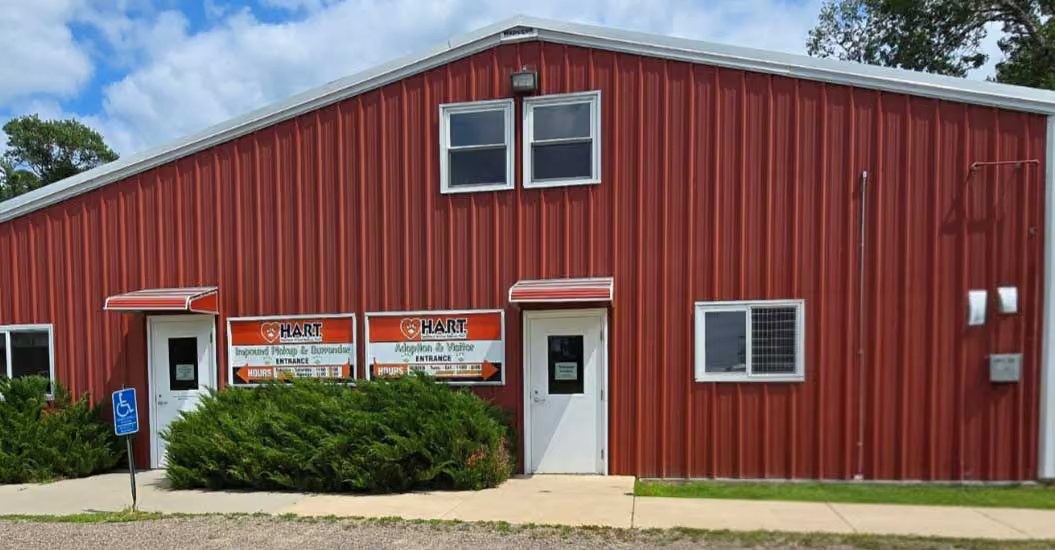
Purchased the building on Dellwood Drive in Brainerd. After many hours of volunteer labor and many dollars worth of donated materials, HART opened the doors to the shelter we all know today.
At that point HART was financially stable enough to hire five (5) staff members including an office manager, kennel manager and three (3) kennel assistants. HART also secured impound contracts with thirteen (13) local municipalities to house impounded animals. That was the backbone to the financial stability HART needed to operate. It was also a step forward in helping the original mission of helping animal.
1992
HART maintained a successful business over the years. The annual income budget increased from $10,000 in 1992 to the present annual income budget of $480,000. As the business was growing financially it was also growing in many other areas. An education program was developed and implemented, serving all ages, public awareness was heightened and shelter care had become top-notch.
2014
In the spring of 2014 HART underwent an extensive renovation of the shelter. The cost of the renovation was about $500,00 and the shelter is state of the art today.
HART has a staff of thirteen including an executive director, shelter manager and office manager.
2026
HART has a staff of thirteen including an executive director, shelter manager and office manager.
Board Meetings
Board of Director meetings are quarterly. The annual meeting of the membership is held the first Tuesday in June of each year. Meetings are open to the membership. If any member wishes to address the board they will need to contact the board president at least two (2) weeks prior to meeting date and ask to be included in the agenda.
HART is a 501 c (3) Non-Profit organization governed by a Board of Directors.
It is our mission to build compassionate relationships between people and animals through quality education, sheltering and adoptions.
Reach Out To Us
H.A.R.T.'s Open Door Policy
Several years ago the board of directors voted to classify HART as an “Open Door Shelter". This means no stray, abandoned or neglected animal will be turned away if there is kennel space available. I would like to take this opportunity to explain how this policy works, and the many facets of the shelter with impound business.
HART is an open admissions humane society as well as the impound holding facility for an average of ten local municipalities. Although the two businesses are housed in the same building, they are two separate identities.
Stray Animals: (Animals found with now owner present)
- The shelter takes in all stray animals as they come through the door. If there is kennel space available. There is no fee assessed to these animals, but a donation to help care for them is always welcome.
- These animals are held for seven days when possible. In a case that the stray animal is sick, injured or aggressive, the animal may be humanely euthanized before the seven-day holding period is up.
- Stray animals are advertised on HART's Facebook page as a courtesy. If not claimed by the end of the holding period, the animal becomes property of HART and is entered into the intake process.
Personal Surrender Animals: (Animals with an owner)
HART also takes in animals that have an owner, (personal surrenders) but who, for various reasons, the owner can no longer keep the pet.
- A surrender fee is assessed to personal surrendered animals.
- Intake of a personal surrender animal is based on the animal as well as space available at the shelter.
Impounded Animals: (Animals running at large in a contract impound area)
- Impound animals are brought to HART by either animal control or a law enforcement officer.
- If the animal has identification, the officer will attempt to contact the owner before impounding it. Animals that are brought to the shelter are scanned for a microchip.
- All impound animals are held for contracted holding time. With the exception of sick, injured or highly aggressive animals.
- All owners claiming their animal from impound are required to pay all fees set by the municipality before the animal is released.
- Impound animals are the property of the municipality that authorized impounding.
- Animals are assessed and medically tested at the end of the impound hold and either are placed on the HART adoption floor or humanely euthanized.
Is HART an Open Administration Shelter vs N0-Kill Shelter
HART cannot be a no kill facility because it is an Open Door shelter and Open-Door facility: therefore, we often receive animals for which euthanasia is the most appropriate and humane option.
No-Kill shelters take in only a limited number of animals and the highly adoptable ones. If they are full No-Kill shelters do not take in one until one is adopted.
HART has chosen to be an open admissions shelter because there needs to be someplace for all these helpless animals to go. If a shelter only takes in the most desirable breeds, sizes, ages etc., who cares for the so called “misfits”? A No-Kill shelter has very limited intake.
HART strives to be a Low-Kill shelter and does everything possible to make this happen.
H.A.R.T. is a Low-Kill Shelter
Low Kill Shelter - What does that mean?
A low kill shelter means that we do all we can to place every "adoptable" animal that comes into our shelter. We do not have a time limit on an animal's stay, and an adoptable animal will not be euthanized to make room for another. HART works with many other shelters and No-Kill rescues to transfer animals that are adoptable but for some reason have been overlooked on the adoption floor.
The instances where we may have to euthanize are:
- Animal is too sick or injured (beyond medical treatment)
- Medical treatment cost outweighs the likelihood of adoption
- Not adoptable due to aggression or failed temperament test
- Not adoptable or suffering due to severe kennel stress
I have included a few view points on the No-Kill vs Kill controversy. Please bear in mind that HART does not endorse these articles, they are strictly for your information. You can find many more articles and viewpoints on this subject on the internet.
There is no easy or right solution to the problem of pet overpopulation and the sad reality of mankind not caring for helpless animals. That is the reason for the variety of shelters trying to do the best thing possible. Education is the best tool we can possess.
Kill Vs. No Kill Animal Shelters:
Ultimately, which is the Best?
Pretty much everyone who realizes there are stray cats and dogs on the streets knows that the pet population is a problem in this country. Most shelters are over stocked with homeless animals and continue to take in more than they are able to adopt out. Those who felt that it was unfair to put animals in shelters for a short period of time only to euthanize them later, even while perfectly healthy and only for the reason that they have no home, are the ones who invented the "No Kill Shelter". But how far does the term "no kill" have to go before the welfare of the animal is taken into consideration.
I mean sure, it stinks to have to euthanize an animal. It's horrible when it's your own pet but when you are the actual person ending this animal's life, it comes from a different perspective. I've been in those shoes numerous times and I will tell you, it's never fun. There are times when an animal is sick and suffering and the deed needs to be done. That doesn't make it any better but one has to take solace in knowing that the suffering for that animal has ended. In shelter situations, in the case of kill shelters, it gets more difficult. The fact is, perfectly healthy animals do get euthanized because they are homeless. Some are put to sleep when it has been determined that they will be unadoptable. Dogs that are aggressive or severely ill often fall under this group. The same goes for cats. When you look at it from the view of the Kill Shelter, there are many homeless pets out there and keeping pets in the shelter who may never be adopted are simply taking up space that adoptable pets could be placed in. Sick pets cost money to treat and money isn't something that can just be thrown around at shelters. It really does sound cruel to doom one pet to death in exchange for another. In reality, what else are they to do?
So what about the No Kill shelters? No kill shelters vary slightly from shelter to shelter. There are those who are considered "no kill" and will pretty much keep pets until they are adopted out. Some will, however, euthanize animals that are suffering or harboring infectious diseases. There are others that go by the "No Kill" guideline even more strictly. If they are going to be a no kill shelter, that means they will not euthanize any pet. But what about pets who are ill and who have a poor quality of life? Many cats are simply freaked out beyond belief simply by being caged. I've personally seen a number of cats who make themselves very ill from the stress of being in a shelter environment. It's never fun to walk into a shelter and see the pets caged, begging to be adopted. Think of what it would be like to live there.
The public often responds to no kill shelters more easily than kill shelters. Perhaps the reason may be that they feel the folks who run no kill shelters care more about the animals. Because of this these shelters are extremely over run, some with hundreds of dogs and cats. Too often more pets are being taken in than are being adopted out. So which is the best type of shelter? The fact of the matter is that neither is better than the other. The simple point is that they are both available to provide homes for homeless pets. It doesn't matter what their policies are. It doesn't matter who funds the shelter, whether it be by private donations only or government funded. Most shelters are struggling to get by and provide care for the pets regardless of where their money is coming from. All that matters is that both types of shelters have pets that need homes. Because of human ignorance, our world is overly populated by cats and dogs. Because of humans cats are giving birth to millions of kittens every year and dogs are running rampant through the streets. It's because of us that these shelters are full of unwanted pets.
You cannot blame the kill shelter for their policies. They have pets that need homes and they have limited funds to provide for them. In the best interest of the pets, unadoptable pets are euthanized to prevent them from having to live out their entire lives in a shelter. No kill shelters are also operating on limited funds and are more often than not, over their limits on what they can actually afford to care for.
Pets are in all kinds of shelters. Pets in kill shelters are in need of homes just as badly as those in no kill shelters. It's not the animal's fault that he is in one or the other. He doesn't understand why he's there, how long he will be there or what's going to happen to him. The public needs to be aware that it's okay to not agree with the policy of a shelter. However, if you don't agree with the kill shelter and do not want to visit them in search of a pet because you don't want to support them, keep in mind that it's the pet that is losing the battle. This applies to no kill shelters as well. The pet may not be euthanized there, but he will be doomed to a life in a cage if he goes unadopted. You may be asking yourself, "so where do I go to look for my new dog or cat?" The answer is simple. Visit both types of shelters if you have them in your area. It doesn't matter what their policies are. All that matters is when you meet the big brown eyes of the most perfect dog, or hear the soft rumbling purr of a cat that was made just for you. All that matters is that you choose the pet for you and provide him or her with the most loving home, the best care, and the happiest rest of his life that you possibly can. Pets in shelters have been through a lot, regardless of the reason why they were placed there. They deserve a chance despite the type of shelter they now live in. Put politics and emotional feelings aside and focus on your potential adopted pet.